The Best Agentic AI Solutions in 2026: A Comprehensive Comparison

Summary
This ebook compares the best agentic AI solutions on the market, showing how leading platforms move beyond dashboards and copilots to deliver automated business action. It also explains the core capabilities that matter when evaluating platforms, so buyers can make informed decisions based on real-world impact rather than AI hype.
You will also find a detailed comparison of leading platforms from top agentic analytics companies, including GoodData, ThoughtSpot, Tableau Next, Tellius, and Incorta.
Click here to jump directly to the comparison table.
What Makes the Best Agentic AI Platform?
The best agentic AI platform is the one that consistently turns data into automated business action, not the one with the longest list of AI features. This matters because real value comes from autonomy, and generative AI’s projected $2.6 trillion to $4.4 trillion annual impact depends on systems that can move from insight to execution.
Earlier analytics tools focused on reporting or helped users analyze data faster, but agentic analytics tools go further by using autonomous agents to continuously monitor data, identify meaningful signals, and execute predefined actions with minimal human involvement.
Core Capabilities That Matter Most
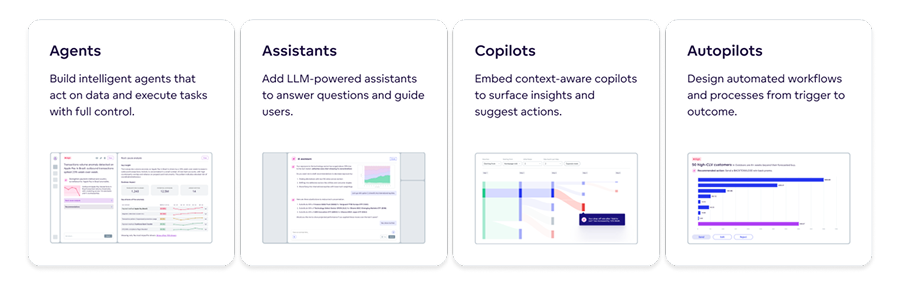
The best agentic AI platforms are defined by four core capabilities: autonomous intelligence, multi-agent orchestration, workflow automation, and semantic understanding.
These capabilities matter because the goal of agentic analytics is measurable business impact, not impressive demos or isolated AI, especially as organizations move from SMB-scale experimentation to enterprise-wide deployment.
- Autonomous intelligence means agents can plan and execute multi-step analytical workflows, reason over data patterns, and make decisions based on business rules rather than simply responding to prompts.
- Multi-agent orchestration allows specialized agents, such as data preparation, analysis, and action agents, to collaborate on complex problems and deliver unified results. When specialized agents work in concert, they drive higher efficiency and more consistent outcomes.
- Workflow automation ensures insights lead to execution, whether that is creating a support ticket, updating a CRM record, adjusting pricing, or alerting stakeholders.
- Semantic understanding provides agents with a deep awareness of business terminology, metrics, and context, ensuring that questions and actions are interpreted correctly and consistently.
Where Do the Top AI Agent Platforms Deliver Fastest ROI?
The top AI agent platforms can deliver value across all industries, but the fastest ROI is typically seen in customer service, ecommerce, hospitality, and financial services.
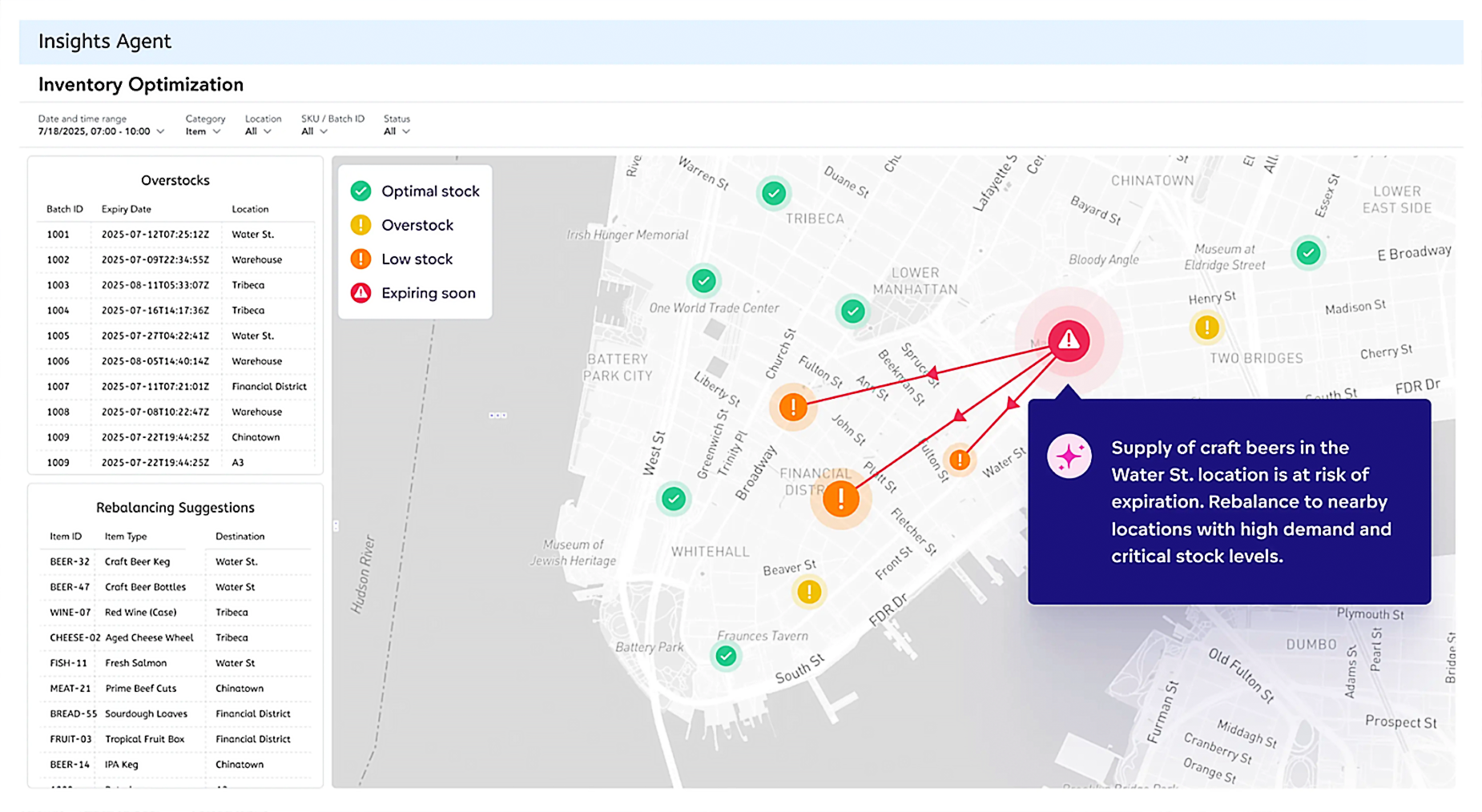
- Call centers and customer support use agents to detect deflection drivers, monitor quality metrics, and flag churn risk, enabling the best agentic customer support experiences through automated ticketing and escalation.
- E-commerce and retail teams use agents to identify conversion anomalies, analyze pricing and inventory impacts, and trigger merchandising or campaign adjustments.
- Travel and hospitality organizations rely on autonomous monitoring of demand shifts, cancellations, and RevPAR variance to drive real-time pricing and capacity decisions.
- Finance and banking teams use agentic analytics for fraud detection, AML monitoring, and risk tracking, with automated case creation and compliance alerts. Balancing risk management with innovation depends on strong foundations, as outlined in this AI transformation playbook.
How to Choose the Best Agentic AI Platform for Your Needs
Choosing the best AI agent platform starts with understanding how it will fit into your organization. The right platform should align with your data architecture, operating model, and long-term analytics strategy, and offer the best AI agent framework for production-grade workflows.
The goal is to select a solution that can be adopted incrementally, scaled across teams, and embedded into real business workflows without forcing a complete rebuild of the analytics stack.
It is also important to consider how the platform will be used day to day, including how it supports building and deploying AI agents across internal and customer-facing use cases. The best platforms support these deployment models, maintain governance, and adapt as agentic use cases mature.
Key Evaluation Criteria for the Best AI Agent Platforms
The best agentic analytics tools can be evaluated across eight core areas. These areas cover how well a platform automates work, supports developers, scales across teams, embeds into applications, integrates with other systems, enforces governance and security, delivers a usable experience, and understands business context.
1. Autonomous Intelligence & Multi-Agent Orchestration
An agentic AI platform should act as an autonomous AI system that can think, plan, and carry out multi-step tasks on its own. It should provide intelligent automation through a multi-agent architecture, using specialized agents that work together to complete complex workflows automatically.
The platform should also remember the context from past sessions to improve results over time and offer strong natural language understanding, allowing users to communicate with it naturally instead of relying on exact keywords.
2. Analytics-as-Code & Developer Flexibility
The best AI agent platforms adopt an analytics-as-code approach, providing developers with maximum flexibility, composability, and openness. Analytics are defined through declarative metadata, making them easy to manage, highly customizable, and simple to reuse across different development workflows.
The platform should also support CI/CD, MCP servers, IDE extensions, developer tools, and a custom data connection framework, allowing teams to treat every part of the analytics stack as code. This makes it simple to work with the entire analytics model at once or handle individual objects separately, resulting in a more efficient and developer-friendly workflow.
3. Multitenancy & Enterprise Scalability
An agentic analytics platform should be designed for enterprise scale from the ground up. Native multi-tenant architecture ensures that multiple teams, customers, or business units can operate securely on the same platform without data leaks or performance issues.
Strong tenant isolation, granular security models, and clear data boundaries are crucial for protecting sensitive information. At the same time, the platform should support high concurrent user volumes and maintain consistent performance as usage grows.
Cloud-native deployment options, combined with resource allocation and quota controls, also help organizations to scale efficiently. These capabilities ensure predictable performance, cost control, and reliability as agentic analytics expands across the enterprise.
4. Embedding Capabilities
An agentic AI platform should support embedding analytics and AI agents directly into applications. This ensures the analytics feels like a seamless part of the product, rather than a separate tool.
Embedding requires a robust JavaScript SDK, support for embedding AI agents within application workflows, and flexible APIs for integration. Mobile SDK support is also important for organizations delivering analytics across devices. Together, these capabilities allow teams to embed agentic analytics wherever users work, without sacrificing performance or control.
5. Integration & Workflow Automation
An agentic AI platform should provide strong integration and workflow features with built-in automation at every stage of the analytics process.
The solution should connect easily to any environment through universal data warehouse connectivity, hybrid data source support, and a custom connector framework, allowing organizations to use any technology they prefer.
An orchestration and guardrail framework, supported by an event-driven architecture, should be present to ensure that workflows run reliably and can respond to changes in real time.
The platform should integrate smoothly with business applications, support integrating with customers’ own LLMs, and offer an action execution framework that turns insights into automated steps.
Together, these capabilities make it easy to embed analytics into existing systems and create fully automated, end-to-end workflows.
6. Data Governance & Security
An agentic analytics platform must enforce strong data governance and security across every layer of the system. Inadequate risk controls are responsible for many AI projects failing to move past the pilot stage.
A governed semantic layer, built on a dedicated metadata layer, ensures AI agents operate on trusted metrics and consistent business definitions. By reasoning on top of this layer rather than raw data, agents stay aligned with approved logic and do not bypass governance controls.
Role-based access control, compliance certifications, and accessibility standards compliance are essential for enterprise adoption and success. These controls ensure the right users see the right data while meeting regulatory and organizational requirements.
Comprehensive audit trails, data lineage, impact analysis, and agent monitoring provide transparency and accountability. Explainability makes it clear how insights and actions are produced, supporting trust and governance.
7. Conversational Analytics & User Experience
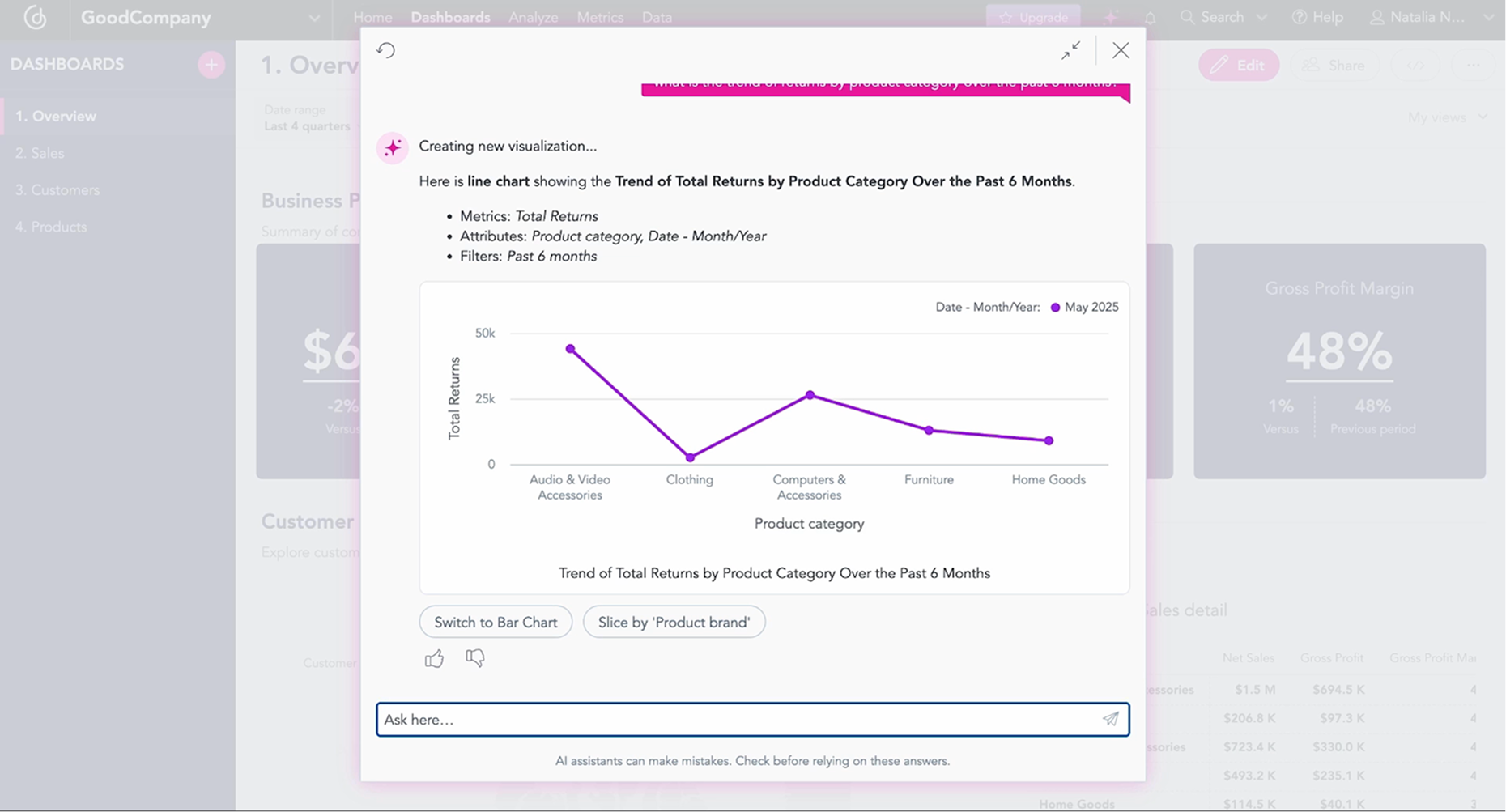
Top agentic AI platforms make analytics accessible through natural, intuitive interactions, so users can explore data without writing code or navigating complex interfaces. People can ask questions in everyday business language, refine results through context-aware conversations, and move fluidly between questions and insights as their understanding evolves.
A strong user experience also supports different ways of working. Some users prefer conversational entry points, while others rely on visual exploration, search, or workflow-driven views. The best platforms allow users to start at a high level and progressively drill into detail, with consistent answers backed by a governed analytics catalog and a deterministic query engine.
Rather than waiting for users to ask the right question, effective platforms surface insights proactively. Alerts, anomaly detection, and key driver analysis help users spot issues and opportunities early, while suggested next steps and clear explanations make it easier to act with confidence. Mobile support, accessibility, performance, and personalization ensure these experiences work reliably for every user, at any scale.
8. Semantic Understanding & Business Context
The best agentic analytics platforms understand business context, not just tables and schemas. They use a business-aware semantic layer to capture how an organization defines its metrics, terminology, and logic, so AI agents interpret data the same way people in the business do.
This shared understanding becomes the foundation for intelligent behavior. By relying on governed metadata rather than keyword matching alone, agents can recognize intent, apply domain knowledge, and adapt as definitions and priorities change over time. This makes interactions more accurate and more relevant to real business questions.
Semantic understanding also plays a critical role in trust. When AI agents operate on governed metrics and consistent definitions, insights and actions stay grounded in reality. This reduces hallucinations, improves explainability, and ensures decisions remain aligned with established business logic.
Top Agentic AI Platforms: Side-by-Side Comparison
The table below compares GoodData, ThoughtSpot, Tableau Next, Tellius, and Incorta across the core capabilities of the best agentic AI platforms.
Use the drop-down menu to select alternative solutions.

Detailed Review: Comparing the Best Agentic AI Platforms
Below we examine the best agentic AI platforms one by one, explaining how each solution delivers agentic analytics, where it performs best, and what trade-offs to consider.
GoodData
Best For
Creating Enterprise-Grade AI Agents
What is GoodData?
GoodData is an agentic analytics platform built for teams that need to turn analytics into reliable, production-grade AI systems. It supports AI product engineering and large-scale deployments through analytics-as-code, a composable architecture, and native multitenancy, enabling teams to move from early experimentation to production safely, as this product journey demonstrates.
The platform works equally well for internal analytics and embedded use cases, making it a strong fit for SaaS companies building AI-powered analytics into their products.
Proven at scale with Fortune 500 customers across finance, healthcare, retail, and software, GoodData delivers production-safe AI agents with strong security, governance, and performance.
Its AI-native architecture avoids black boxes and data lock-in, giving technical teams full visibility into how agents access data, execute workflows, and deliver insights.
Key Features of GoodData
GoodData provides a set of platform-native capabilities designed to support production-grade AI agents across analytics, automation, and embedding.
Key features include:
- Unified data intelligence with an AI Lake that combines governed metrics, metadata, and semantic context into a single foundation for agent reasoning and execution.
- Agent orchestration and guardrails through AI Hub, which coordinates multi-agent workflows, enforces policies, and controls how agents access data and trigger actions.
- High-performance execution via a native MCP Server and deterministic query engine, ensuring predictable results, low latency, and production-safe agent behavior.
- Analytics-as-code with CI/CD integration, allowing teams to define metrics, models, and logic declaratively, version them, and deploy changes safely across environments.
- Flexible integration and extensibility through a comprehensive SDK ecosystem, FlexConnect for custom data connectors, and Bring Your Own LLM support.
- Enterprise-ready scale and governance, including strong-walled multitenancy, a self-learning semantic layer, compliance certifications, and accessibility standards support.
Pros & Cons of GoodData
Designed for building reliable, production-ready AI agents that move from insight to action
Cons
The extensive feature set and API-first capabilities may offer more complexity than required for simple, one-off projects
Strong emphasis on control, transparency, and repeatability across analytics and AI workflows
Cons
The platform is optimized for multi-tenant and embedded environments, which may be overkill for single-user desktop analysis
Consistent metrics and business logic reduce ambiguity and improve trust in AI-driven decisions
Cons
Teams must align on business definitions to get the most value from governed analytics
Scales cleanly across teams, customers, and embedded use cases without architectural compromises
Cons
Maximizing the platform's value requires a transition from ad-hoc data habits toward a more disciplined, governed framework
Open and vendor-independent approach supports long-term flexibility and architectural choice
Cons
Realizing full value requires intentional platform setup rather than default configurations
ThoughtSpot
Best for
Search-First Conversational Analytics
What is ThoughtSpot?
The ThoughtSpot Agentic Platform is an analytics system built around conversational analytics (Spotter) with additional AI-driven automation agents that assist different roles across the analytics workflow. At its core, users ask questions in natural language, and ThoughtSpot returns insights, charts, explanations, and recommended follow-ups.
Key Features of ThoughtSpot
Around its analytics core, ThoughtSpot adds specialized AI agents that automate:
- Conversational analytics with Spotter, enabling users to ask business questions in natural language and instantly get data answers, visualizations, follow-up insights, and context-aware conversations
- Data modeling with SpotterModel that automatically builds or refines the data model using AI, reducing the manual work typically done by data engineers.
- Dashboard creation with SpotterViz, which generates entire dashboards from a simple natural-language prompt, automatically selecting chart types and formatting.
- Developer automation with SpotterCode, which produces ready-to-use embed code, enabling developers to integrate ThoughtSpot into applications with minimal manual effort.
- AI-to-AI integrations through the Agentic MCP Server.
Pros and Cons of ThoughtSpot
Easy for business users thanks to conversational analytics
Cons
Still fundamentally search-based; users must adopt question-driven workflows
Automates repetitive tasks (models, dashboards, embedding)
Cons
Automation outputs require a human in the loop
Faster time-to-value with AI-generated assets
Cons
Quality depends heavily on clean data and proper modeling
Helping with simple data modeling
Cons
SpotterModel cannot replace expert modeling in complex systems
Consistent experience across roles
Cons
Dashboards may feel generic or lack business context
External LLM integration via MCP Server
Cons
Still tightly coupled to the ThoughtSpot ecosystem
Tableau Next
Best for
Visual Analytics with Emerging Agentic Features
What is Tableau Next?
Tableau Next is a next-generation, agentic analytics platform built on the Salesforce platform and deeply integrated with Agentforce (Salesforce’s digital labor/agentic AI layer).
It delivers personalized, contextual, and actionable insights across workflows by combining Tableau’s analytics, AI, reusable component architecture, and native integration into users’ existing workflows.
Key Features of Tableau Next
- Agentic Analytics Powered by Agentforce: Delivers AI agents with pre-built analytics skills that can interpret data, surface insights, and help drive actions directly where users work.
- Conversational analytics: Users can ask questions about data in natural language and get accurate, contextual insights without deep technical expertise.
- Tableau Semantics: An AI-powered semantic layer provides consistent business definitions, trusted metrics, and unified interpretations of data across the platform.
- Data 360: A single, governed, enterprise-grade data foundation that unifies customer and operational data for analytics without unnecessary duplication.
- Built-In Analytics Skills (Data Pro, Concierge, Inspector): Pre-built skills help accelerate data preparation, natural language exploration, and automated monitoring of trends without custom setup.
Pros and Cons of Tableau Next
Natural-language and AI interaction lowers the barrier to analytics for business users
Cons
Dependent on the Salesforce ecosystem (i.e., full value is tied to Salesforce setup)
Actionable insights: supports real-time decisions, not just reporting
Cons
Cost considerations: licensed alongside Salesforce and specific agent features
Pre-built analytic skills speed up modeling, monitoring, and insight delivery
Cons
Risk of over-expectation: it’s marketed as an AI “revolution,” but real impact varies by use case
Helps with contextual and personalized analytics
Cons
Agent performance hinges on strong semantic models and good data quality
AI agents can automate analytics workflows
Cons
To fully use agentic features, you need to adopt Data 360 + semantic modeling + workflow integration, which can be a heavy setup for some teams
Tellius
Best for
Automated Deep Insights & Life Sciences
What is Tellius?
Tellius is an AI-powered analytics and decision intelligence platform that combines conversational analytics, generative AI, and multi-agent orchestration to automate complex analysis workflows and generate strategic insights without writing code.
The solution is designed to move beyond traditional dashboards by enabling users to ask questions in natural language and have AI agents plan, execute, and even act on analytics workflows (all with governance, explainability, and enterprise-grade scalability).
Key Features of Tellius
- Conversational Analytics & Natural-Language Interface: Users interact with data through natural language queries, turning questions into analysis and insights without SQL or a dashboard.
- AI Agents & Agentic Flows: Tellius provides a suite of specialized AI agents that work together to plan, execute, and automate multi-step analytical workflows based on business goals.
- Automated multi-step workflow execution (Agent Mode): With Agent Mode, Tellius autonomously plans and executes multi-step analysis, moving from root cause detection to scenario recommendations in a way that mirrors how a human analyst works.
- Generative Narratives: creates automated visual stories and narrative summaries of insights to help users understand and act on findings quickly.
Pros and Cons of Tellius
Agents collaborate (planning and preparing visualizations, etc.) rather than simply providing chat responses
Cons
Advanced agentic flows and custom workflows may require careful setup and design
Agent Mode plans and executes complex queries, root cause analysis, and recommendations
Cons
Smaller teams may find it heavy or over-engineered for basic reporting
Semantic knowledge layer aims to reduce hallucinations and provide trustworthy results
Cons
Poor data quality reduces agentic accuracy and insight relevance
The platform does not just answer what happened. It also explains why it happened and what to do next.
Cons
Unstructured or text queries are not a stated strong point at this stage
Users can create or tailor AI agents without coding
Cons
Marketing vs. reality gap: Full autonomous agent execution may still need human oversight
Incorta
Best for
Real-time operational analytics with emerging agentic workflows
What is Incorta?
Incorta is a real-time operational analytics and unified data platform, providing organizations with instant, high-fidelity access to raw data from ERP, CRM, and other systems without the need for complex ETL.
It has recently expanded its roadmap to support agentic workflows and AI-powered decision intelligence (meaning it can automate parts of analysis and decision workflows using contextual AI and integrated automation).
Unlike pure analytics tools, Incorta’s strength is its data foundation (Direct Data Mapping combined with real-time live data) that supports fast queries, AI exploration, and action-oriented workflows. The recent “agentic” vision focuses on allowing AI to work across data + workflows + automation to help surface insights and trigger decisions in context
Key Features of Incorta
- Real-Time Unified Data Foundation: Incorta provides a data platform that connects directly to operational source systems, delivering real-time, raw data access without the need for ETL. This ensures analytics and AI are always based on the freshest available data.
- AI-Powered Querying: Users can interact with data using AI-driven exploration or natural language to get insights without deep SQL or BI expertise.
- Nexus: Incorta’s emerging Nexus suite enables AI workflows that connect data insights with actions and business process triggers across finance, operations, and supply chain
- Nexus AIDA: Nexus AIDA offers native agents tailored for specific business domains (e.g., planning, procurement) that leverage real-time data to deliver context-rich, automated decisions.
- Nexus Marketplace for Agents: Partners and developers can build, share, and monetize custom agents through a marketplace, extending their agentic capabilities.
A real-time unified data foundation provides agents with access to live, consistent data, rather than stale snapshots
Cons
Agentic capabilities are emerging and not yet fully mature as standalone products
Supports specific domain agents (Nexus AIDA) that can automate routine tasks and decisions
Cons
Unlike GoodData, ThoughtSpot, or Tableau, Incorta is yet to market a rich ecosystem of distinct agent types (e.g., modeling, visualization, embedding)
Integrates AI, analytics, and workflow together (not as separate tools)
Cons
Full decision-maker agents (planning, negotiation, optimization) are still evolving
Strong governance and controls are built in, so AI respects business logic
Cons
Because the agentic vision is broad, practical use cases vary widely between organizations.
Why GoodData Is the Best Enterprise AI Agent Platform for Custom Agentic Applications
The GoodData platform stands out as the top enterprise AI agent provider for organizations building secure, scalable, custom agentic applications. It is designed for teams that need control, flexibility, and reliability when deploying AI agents in real production environments, and offers everything you can expect from the best AI agent builders.
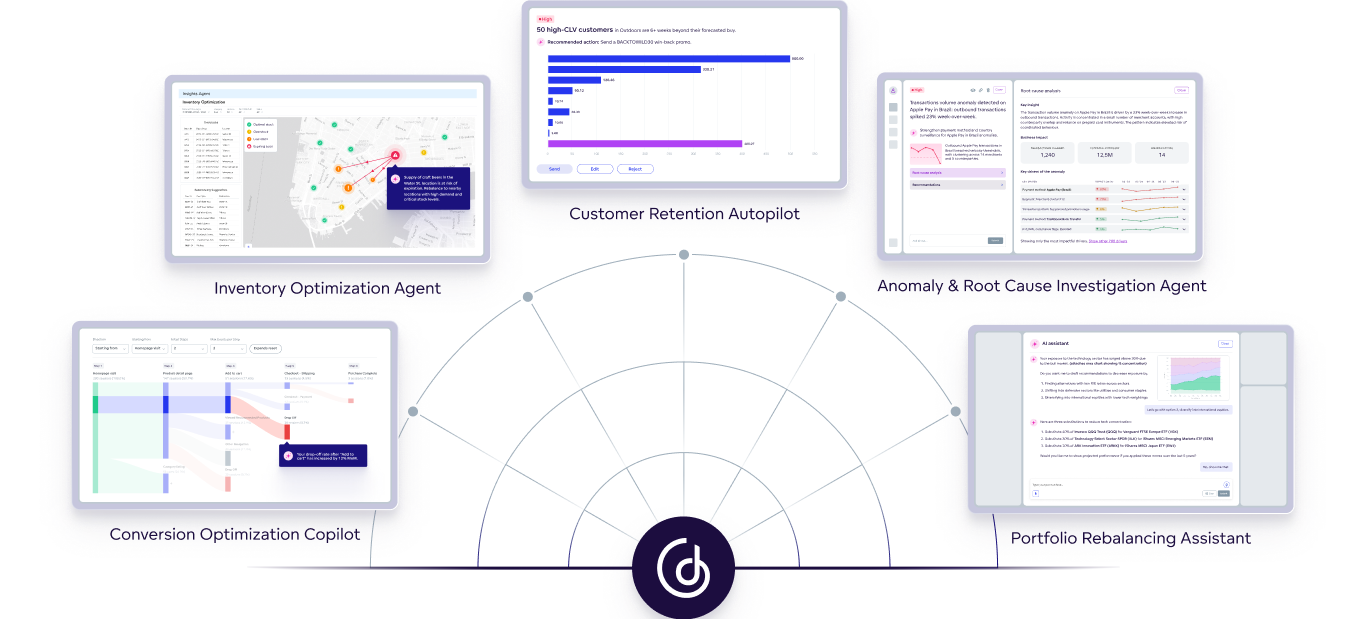
GoodData supports agentic analytics with:
- Analytics-as-code architecture that gives teams full control over metrics, logic, and agent behavior through versioned, deployable definitions
- Composable platform design that fits into existing data stacks without forcing vendor lock-in
- Enterprise-grade security and governance that ensures AI agents operate on trusted data and respect access controls
- Comprehensive embedding capabilities for delivering agentic analytics inside internal tools or customer-facing products
- Proven scalability across multi-tenant deployments and high-concurrency environments
- Professional services that help teams design, deploy, and scale reliable agentic solutions faster
Ready to see how GoodData’s agentic analytics platform can transform your data strategy? Request a demo today.
The Best AI Agent Platforms: Frequently Asked Questions (FAQs)
What criteria should you use to compare the best agentic analytics platforms?
Compare platforms on autonomous intelligence, multi-agent orchestration, workflow automation, semantic understanding, and governance. Then validate enterprise needs like multitenancy, embedding, integrations, auditability, and scalability. The best agentic analytics platforms perform reliably in production, not just in demos.
What questions should you ask in a demo to verify a product is truly agentic (not just a copilot)?
Ask the vendor to show an agent completing a multi-step workflow end-to-end, without manual prompting at each step. Ask what actions it can execute, how it is governed, and how it handles failures. Also ask how the system keeps context across sessions and proves outputs are grounded.
What features separate top agentic analytics solutions from traditional BI?
Traditional BI primarily supports reporting and exploration, while agentic analytics adds autonomous monitoring, reasoning, and action execution. Top solutions can trigger workflows based on signals, not just display insights. They also rely on governed semantics, ensuring that actions align with business definitions and access controls.
How do you evaluate multi-agent orchestration in agentic analytics platforms?
Evaluate whether the platform supports specialized agents with distinct roles, such as data prep, analysis, and action agents, and whether they coordinate through a single workflow. Look for clear handoffs, shared context, and traceable decisions. Strong orchestration includes guardrails, permissions, and monitoring at each step.
What are the must-have security requirements when comparing agentic analytics solutions?
Minimum requirements include role-based access control, strong tenant isolation for multi-tenant use cases, and secure data boundaries. You also need audit trails for agent actions, secure integration patterns for external systems, and controls for model access when bringing your own LLM. Security must apply to both data and actions.
What governance controls should the best agentic platforms include?
Look for a governed semantic layer, consistent metric definitions, and policy controls over what agents can access and execute. The platform should provide audit logs, lineage, and clear explainability for insights and actions. Agent monitoring, approval workflows where needed, and change management for definitions are also key.
How do top platforms reduce hallucinations and ensure answers are grounded in governed metrics?
Top platforms ground agent reasoning in a governed semantic layer with consistent metrics, definitions, and approved business logic. They use deterministic query execution for calculations and return traceable references to the underlying data and logic. Strong systems also utilize metadata-driven intent recognition, ensuring responses align with the organization’s terminology.
How do top agentic solutions handle cost control (e.g., query limits, caching, model routing, usage monitoring)?
They use query controls and quotas, plus caching and acceleration to reduce repeated compute costs. Many also route requests by complexity, using smaller models for routine tasks and stronger models only when needed. Usage monitoring, audit logs, and per-tenant resource controls help prevent runaway cost and ensure predictable spend.
Does GoodData look like the better fit?
Get a demo now and see for yourself. It’s commitment-free.
Trusted by